I’ve been working on our local food system for a while now. Mostly from a personal point of view, but lately, more and more from a community point of view. I’ve found that it takes a community to create a viable system. I can do enough myself to survive, but it’s a lot of work, and variety goes missing. So I find myself doing more talking and organizing than ever. As I talk to people and try to nudge things forward one question always comes up. WHY? Why is local food so important. Why would I want to change what I eat, what I do, how I farm, how I shop, etc? I have a list of responses including Health, Freshness, Safety, Food Security, Environmental Impact, etc. But the one that gets the most attention and makes people think (at least in my community) is the Economics of local food. I get some odd looks when I say that. We are a farming community. People know that making a living farming is hard, risky, and for new people starting out pretty much impossible. We have a few large scale farmers here working from a base that grandpa started. They don’t produce for the local market, and they survive by getting bigger every year. Most of them are one bad year from bankrupt. We have a lot of hobby farms of various sizes where the farmer works full time somewhere else to support his/her farming habit. And we have a few poor dirt farmers like me, trying to make a go growing for the local market. People look at me and think “no one in their right mind would try to do what you do… How’s that make economic sense.”
But, here’s what I discovered as I poked at this problem. It does make economic sense. Here’s why.
In our county there are about 31000 people. If they spend as much on food as my family does, about $40 per person per week (I’ve been told that number is way low, but it is the number I know is true for me) that means that people in my county are spending at least $64,480,000.00 a year on food. That’s a lot of money in a fairly poor county. Very little of that money stays here, because almost none of the food is produced here. Even at the locally owned grocery stores (there are only a couple small ones) most of the money leaves the county. Why? Because that’s how retail grocery business works. In retail grocery the gross margin is about 30%. That means 70% of what you pay at the check out is what the store is paying to have stuff on the shelf. The 30% gets divided up in taxes, utilities, wages, etc. to run the business. A small amount of that stays in the community. That’s it. So for our county, we ship out at least $45,136,000.00 every year. Much of that could stay here. If you buy food that was produced here, most of that money stays. If 10% of our food was produced locally then $4513600.00 stays here. That would make a huge economic difference in our county. That’s not a government program, or a tax burden on the future generations. It’s just keeping our wealth here. As high as 80% of our food could be produced here. That would create jobs, keep wealth local, and have a massive impact on our little community. That’s what I mean when I say a local food system is important for economic reasons.
So, why aren’t we doing it? Many reasons. Consumers don’t buy local food because it is inconvenient to get, or not available most of the time (at least 6 months of the year there are no outlets for local food without going to the farmer.) Large scale farmers don’t see enough of a market to scrap their system and retool. They would go bankrupt in a hurry if they tried. Small scale farmers don’t have the capital nor the volume to access the market. So nothing happens.
That’s what we are trying to change here. I’ll be sharing what we are doing soon.
Showing posts with label Eat Local 2011. Show all posts
Showing posts with label Eat Local 2011. Show all posts
Wednesday, September 7, 2011

Thursday, July 28, 2011
After the silence,.....politics?
So, it's been a LONG TIME since I wrote. Not that I didn't have anything to talk about, its just that ideas, time, and a functional brain didn't really come together at the same time.... (BE GLAD YOU ARE NOT ME...)
So, here I am blogging again. BUT, rather than catching you up on all the cool things happening around the Roost, or with LOCAL FOODS, I'm going to rant (isn't that really why we blog?????)
I went to the farmers market today. The LOCAL market, 2 minutes from my house where I have been selling stuff to my neighbors for the past three months. The INSPECTOR ( cue Inspector Gadget Music...) showed up as I was setting up my table. He wanted to look at my labels. Not my products, just the labels. My labels tell who I am, where I am located, and how to contact me. My signs tell buyers that the products are home made and what they are and what is in them.
I didn't pass inspection, and I was asked to leave. (he said I could stay and sell my 5 bags of greens, but not my bread, but IF he had seen that the bags were closed, he would have fined me for not having processed them in a licenced facility. Been down that road before... I went home. It is 96 degrees F and 100% humidity... greens will not hold for 4 hours in an open container.)
So, I've come home. I'll fix my labels, and be back next week.
On my way home I stopped at the local store for some wine (seemed like a good idea...) They sell bread, but no one there could tell me what was in it, who made it, when it was made, where it was made, or anything about it other than "read the label, and it costs $1.95 a loaf." I don't know how that is safer than my neighbors buying bread from me, knowing where I live, how to get in touch with me, what I put in the bread, when it was made, etc.
I don't blame the drone at the bottom who showed up to inspect. He was just doing his job and trying to survive in the hive. I am frustrated that we keep throwing money into such a STUPID system.
I've formed a group to work on local food issues. We are doing LOTS. It is a slow process, but we are moving. I'm spitting nails, throwing stuff, mad that Big Brother is treading on our progress.
So, here I am blogging again. BUT, rather than catching you up on all the cool things happening around the Roost, or with LOCAL FOODS, I'm going to rant (isn't that really why we blog?????)
I went to the farmers market today. The LOCAL market, 2 minutes from my house where I have been selling stuff to my neighbors for the past three months. The INSPECTOR ( cue Inspector Gadget Music...) showed up as I was setting up my table. He wanted to look at my labels. Not my products, just the labels. My labels tell who I am, where I am located, and how to contact me. My signs tell buyers that the products are home made and what they are and what is in them.
I didn't pass inspection, and I was asked to leave. (he said I could stay and sell my 5 bags of greens, but not my bread, but IF he had seen that the bags were closed, he would have fined me for not having processed them in a licenced facility. Been down that road before... I went home. It is 96 degrees F and 100% humidity... greens will not hold for 4 hours in an open container.)
So, I've come home. I'll fix my labels, and be back next week.
On my way home I stopped at the local store for some wine (seemed like a good idea...) They sell bread, but no one there could tell me what was in it, who made it, when it was made, where it was made, or anything about it other than "read the label, and it costs $1.95 a loaf." I don't know how that is safer than my neighbors buying bread from me, knowing where I live, how to get in touch with me, what I put in the bread, when it was made, etc.
I don't blame the drone at the bottom who showed up to inspect. He was just doing his job and trying to survive in the hive. I am frustrated that we keep throwing money into such a STUPID system.
I've formed a group to work on local food issues. We are doing LOTS. It is a slow process, but we are moving. I'm spitting nails, throwing stuff, mad that Big Brother is treading on our progress.
Tuesday, April 19, 2011

Thursday, April 14, 2011


Wednesday, February 9, 2011
Local Food Friday - Week 5
This is harder than I thought. We found local sources for most of the basic things we need. We can see spring coming, and know that in a few more weeks we will have a lot more options. But, the food is boring (at least if we limit ourselves to only local spices etc.)
This past Friday we just couldn't take it any more. Everyone wanted something tastier than roast with winter veggies or another take on noodles with sauce. We wanted exotic. The orient. Something to light up the taste buds and chase the dull gray of February away. So, we made bulkogi, a Korean marinated beef that we all love. The basic recipe looks like this
1 1/2 pounds beef top sirloin, thinly sliced (Local, from our own beef)
2 tablespoons cider vinegar (Local, from Windy Hill Apple Farm in Newark)
1 cup pear puree (Local, pears we canned)
2 teaspoons ground black pepper (Imported)
1/4 cup soy sauce (Imported)
1 tablespoon white sugar (Imported, yes there is Ohio made sugar, but I haven't found anyone who sells it in my town.)
2 tablespoons Asian (toasted) sesame oil (Imported)
1 tablespoon minced garlic (Local, from our garden)
2 tablespoons chopped green onion (Local, from our garden - we used chives from our greenhouse)
1 tablespoon sesame seeds (Imported)
1/2 pound fresh mushrooms, halved (optional) (Local - the last of the mushrooms we harvested from our Local Roots Kit)
1/2 onion, chopped (optional) (Local - from our Local Roots trip)
We served this with home made Kimchee, sauteed garlic blossoms, imported rice and imported seaweed.
It was a lovely meal, but not completely local. The only thing I felt bad about was the rice. If I'd had more fresh veggies I'd have skipped it, but we needed something to fill that part of the meal.
We are still working on snacks. I'll be posting some of the things we've found soon. I'm also adding condiments to this category. You can live without them, but they make eating so much nicer. They are also highly processed, and filled with junk you don't need. This week we will be making mayonnaise and some kind of mustard. I'll let you know how it goes.
This past Friday we just couldn't take it any more. Everyone wanted something tastier than roast with winter veggies or another take on noodles with sauce. We wanted exotic. The orient. Something to light up the taste buds and chase the dull gray of February away. So, we made bulkogi, a Korean marinated beef that we all love. The basic recipe looks like this
1 1/2 pounds beef top sirloin, thinly sliced (Local, from our own beef)
2 tablespoons cider vinegar (Local, from Windy Hill Apple Farm in Newark)
1 cup pear puree (Local, pears we canned)
2 teaspoons ground black pepper (Imported)
1/4 cup soy sauce (Imported)
1 tablespoon white sugar (Imported, yes there is Ohio made sugar, but I haven't found anyone who sells it in my town.)
2 tablespoons Asian (toasted) sesame oil (Imported)
1 tablespoon minced garlic (Local, from our garden)
2 tablespoons chopped green onion (Local, from our garden - we used chives from our greenhouse)
1 tablespoon sesame seeds (Imported)
1/2 pound fresh mushrooms, halved (optional) (Local - the last of the mushrooms we harvested from our Local Roots Kit)
1/2 onion, chopped (optional) (Local - from our Local Roots trip)
We served this with home made Kimchee, sauteed garlic blossoms, imported rice and imported seaweed.
It was a lovely meal, but not completely local. The only thing I felt bad about was the rice. If I'd had more fresh veggies I'd have skipped it, but we needed something to fill that part of the meal.
We are still working on snacks. I'll be posting some of the things we've found soon. I'm also adding condiments to this category. You can live without them, but they make eating so much nicer. They are also highly processed, and filled with junk you don't need. This week we will be making mayonnaise and some kind of mustard. I'll let you know how it goes.
Thursday, February 3, 2011
Snacks - a conversation with Paul
Paul sent me an email following up on his comment about snacks. He had more to say than what he put in his comment, but he didn’t want to offend. I love the feedback. I love it when people challenge my assumptions and make me question my thinking or clarify my writing. So I’m posting Paul’s email and some of my thoughts.
Hey Alan,
thinking a lot about your recent post. I wrote a lot more than the comment I posted, but then thought it over. I don't want to seem like a detractor in the public forum. I want the discussion, because I think a lot of the ideas are important. But I don't want the discussion to be contentious. So this is my compromise.
You probably gather that I am really direct. Please, if you tire of that, let me know and I will back off or tone down.
Snacks are a mixed bag. A good snack is a great way to prevent low blood sugar. A healthy snack can actually serve to keep the calorie load down. Snacks can be very healthy and an important part of a diet. However, snack foods tend to be junk. I understand the desire for chips and crackers, but they are crap whether local or not. I think the idea of sustainable chips or crackers is doomed or flawed from the outset. We crave them in fact because of the very marketing of food products you are responding to in your sustainable farming venture.
Yes! Snacks (as we find them in the grocery store or the media) are JUNK! There is no nutritional value in Cheetos, though I still marvel at the engineering that went into them to get me to crave them. Snacks fill an emotional spot in our diet, not a survival need. That said, here at the Roost we snack a lot. Some of it is chips and crackers, but a large amount of our snacking is carrots, celery, apples, oranges, bananas, nuts, cheese, olives, etc. Part of our challenge it to find sources for or substitutes for those things that are not produced here, or are not in season, and to find seasonal sources for those things that are produced here and learn ways to store/preserve them for later use as snacks.
Another reality here at the Roost is that we start our day early. By 4:30 am the coffee pot is going, and breakfast is usually finished by 5:30. As a result, we are hungry by 9:30 or 10. It’s not lunch time. In fact, we are usually in the middle of school, writing, farm projects, or some other work. Here is where snacks fill an important nutritional niche in our lives. We need quick food that can be grabbed on the go. Crackers and cheese, crudité, fruit, chips and salsa, lunch meat, these kinds of things fill the gap. Finding or making snack food that is more nutrient dense, less burdened with artificial ingredients, and locally sustainable is our quest for this month.
When I eat crap, I want it to be very clear to myself that that food product is crap--a problem, an unjustifiable indulgence. I can't prove it, but I believe this approach has substantial epidemiological support: think of all the products that have been altered so that they are low fat or low salt. In either case, the end result for the consumer is that the low fat products make the consumer fatter, and the low salt products increase the consumers' salt intake. Is this not precisely because we take problematic food products and adjust them so that we re-categorize? This is now an acceptable choice--it is one of the good guys. So we eat it more regularly, we eat more of it. I think it is fair to interpolate relevant to the question of sustainability. We can produce and consume a certain number of junk products, but aren't we better off if we seriously limit quantity of products that are nutrition poor, made with highly refined ingredients?
That said, popcorn really works for me. If I really want or need a snack-- want the salty and want the crunch--I will pop some corn. But the fact I can't just grab makes me hesitate the perfect amount. Nuts also do it for me. Both are known to have nutritional value. I used to eat a lot more crackers and chips, and I still do once in a while. But I think simply eating less of them is the improvement.
I’d question the nutritional value of popcorn, but it is a great snack. Our problems are the time issue, and finding local sources (though we will be growing popcorn this year, so by fall that shouldn’t be a problem.) Our friends the Adlesbergers pop large quantities and bag it for use later as snacks. Haven’t gotten there yet, but we will be giving that a try.
I asked you some fairly complex questions regarding how you gage sustainability. One comment I want to make to you has to do with how I gage it: if I feel like the approach demands that I deprive myself, I conclude that that is not sustainable. I don't think we should ever deprive ourselves. The good news is that local food tastes better, so it doesn't leave me feeling deprived. There is a paradox though. I could never enjoy half the food products I eat if I didn't have exposure to people very different from myself. That exposure started with travel for me. It continues through education, travel, and technology. All of this becomes paradox because local food only means something to me because of the vocabulary afforded me through very non-local food. It in fact becomes a very important component of my approach to sustainability. I think some of the things you are seeking have to do with that kind of complexity. The resolutions are probably a hodgepodge of finding new products, learning some new cooking approaches, and as you've already indicated--preserving what you need in winter beginning in spring. I am engaging you as a part of my process of adjusting some of my habits. A huge problem for those of us urban dwellers is that we rely on labels, and generally are quite removed from production. Your point of view as a producer can really help me as I try to prioritize my choices. I am still really looking forward to your post regarding the economics we've spoken about.
I agree that sustainability can’t be built on deprivation. Giving up things to “save the world” or even to “save our selves” has never and will never work. Finding better ways to fill those needs, or other was of living that change what our needs/wants are might have a chance.
I think you are right about importing “non-local” food cooking methods, flavor combinations, and even some ingredients. That will give us a much broader pallet from which to create. Yet, the bulk of the ingredients need to be produced locally, or it can’t be sustainable. I’ll get into my version of sustainability/local/ economics/ etc. in the next post.
Thanks for the conversation. Keep pushing the buttons (just not the red one, it makes things explode.)
Hey Alan,
thinking a lot about your recent post. I wrote a lot more than the comment I posted, but then thought it over. I don't want to seem like a detractor in the public forum. I want the discussion, because I think a lot of the ideas are important. But I don't want the discussion to be contentious. So this is my compromise.
You probably gather that I am really direct. Please, if you tire of that, let me know and I will back off or tone down.
Snacks are a mixed bag. A good snack is a great way to prevent low blood sugar. A healthy snack can actually serve to keep the calorie load down. Snacks can be very healthy and an important part of a diet. However, snack foods tend to be junk. I understand the desire for chips and crackers, but they are crap whether local or not. I think the idea of sustainable chips or crackers is doomed or flawed from the outset. We crave them in fact because of the very marketing of food products you are responding to in your sustainable farming venture.
Yes! Snacks (as we find them in the grocery store or the media) are JUNK! There is no nutritional value in Cheetos, though I still marvel at the engineering that went into them to get me to crave them. Snacks fill an emotional spot in our diet, not a survival need. That said, here at the Roost we snack a lot. Some of it is chips and crackers, but a large amount of our snacking is carrots, celery, apples, oranges, bananas, nuts, cheese, olives, etc. Part of our challenge it to find sources for or substitutes for those things that are not produced here, or are not in season, and to find seasonal sources for those things that are produced here and learn ways to store/preserve them for later use as snacks.
Another reality here at the Roost is that we start our day early. By 4:30 am the coffee pot is going, and breakfast is usually finished by 5:30. As a result, we are hungry by 9:30 or 10. It’s not lunch time. In fact, we are usually in the middle of school, writing, farm projects, or some other work. Here is where snacks fill an important nutritional niche in our lives. We need quick food that can be grabbed on the go. Crackers and cheese, crudité, fruit, chips and salsa, lunch meat, these kinds of things fill the gap. Finding or making snack food that is more nutrient dense, less burdened with artificial ingredients, and locally sustainable is our quest for this month.
When I eat crap, I want it to be very clear to myself that that food product is crap--a problem, an unjustifiable indulgence. I can't prove it, but I believe this approach has substantial epidemiological support: think of all the products that have been altered so that they are low fat or low salt. In either case, the end result for the consumer is that the low fat products make the consumer fatter, and the low salt products increase the consumers' salt intake. Is this not precisely because we take problematic food products and adjust them so that we re-categorize? This is now an acceptable choice--it is one of the good guys. So we eat it more regularly, we eat more of it. I think it is fair to interpolate relevant to the question of sustainability. We can produce and consume a certain number of junk products, but aren't we better off if we seriously limit quantity of products that are nutrition poor, made with highly refined ingredients?
That said, popcorn really works for me. If I really want or need a snack-- want the salty and want the crunch--I will pop some corn. But the fact I can't just grab makes me hesitate the perfect amount. Nuts also do it for me. Both are known to have nutritional value. I used to eat a lot more crackers and chips, and I still do once in a while. But I think simply eating less of them is the improvement.
I’d question the nutritional value of popcorn, but it is a great snack. Our problems are the time issue, and finding local sources (though we will be growing popcorn this year, so by fall that shouldn’t be a problem.) Our friends the Adlesbergers pop large quantities and bag it for use later as snacks. Haven’t gotten there yet, but we will be giving that a try.
I asked you some fairly complex questions regarding how you gage sustainability. One comment I want to make to you has to do with how I gage it: if I feel like the approach demands that I deprive myself, I conclude that that is not sustainable. I don't think we should ever deprive ourselves. The good news is that local food tastes better, so it doesn't leave me feeling deprived. There is a paradox though. I could never enjoy half the food products I eat if I didn't have exposure to people very different from myself. That exposure started with travel for me. It continues through education, travel, and technology. All of this becomes paradox because local food only means something to me because of the vocabulary afforded me through very non-local food. It in fact becomes a very important component of my approach to sustainability. I think some of the things you are seeking have to do with that kind of complexity. The resolutions are probably a hodgepodge of finding new products, learning some new cooking approaches, and as you've already indicated--preserving what you need in winter beginning in spring. I am engaging you as a part of my process of adjusting some of my habits. A huge problem for those of us urban dwellers is that we rely on labels, and generally are quite removed from production. Your point of view as a producer can really help me as I try to prioritize my choices. I am still really looking forward to your post regarding the economics we've spoken about.
I agree that sustainability can’t be built on deprivation. Giving up things to “save the world” or even to “save our selves” has never and will never work. Finding better ways to fill those needs, or other was of living that change what our needs/wants are might have a chance.
I think you are right about importing “non-local” food cooking methods, flavor combinations, and even some ingredients. That will give us a much broader pallet from which to create. Yet, the bulk of the ingredients need to be produced locally, or it can’t be sustainable. I’ll get into my version of sustainability/local/ economics/ etc. in the next post.
Thanks for the conversation. Keep pushing the buttons (just not the red one, it makes things explode.)
Tuesday, February 1, 2011
Local Food Friday(s) - week 3 and 4 - Eat Local 2011 January wrap-up.
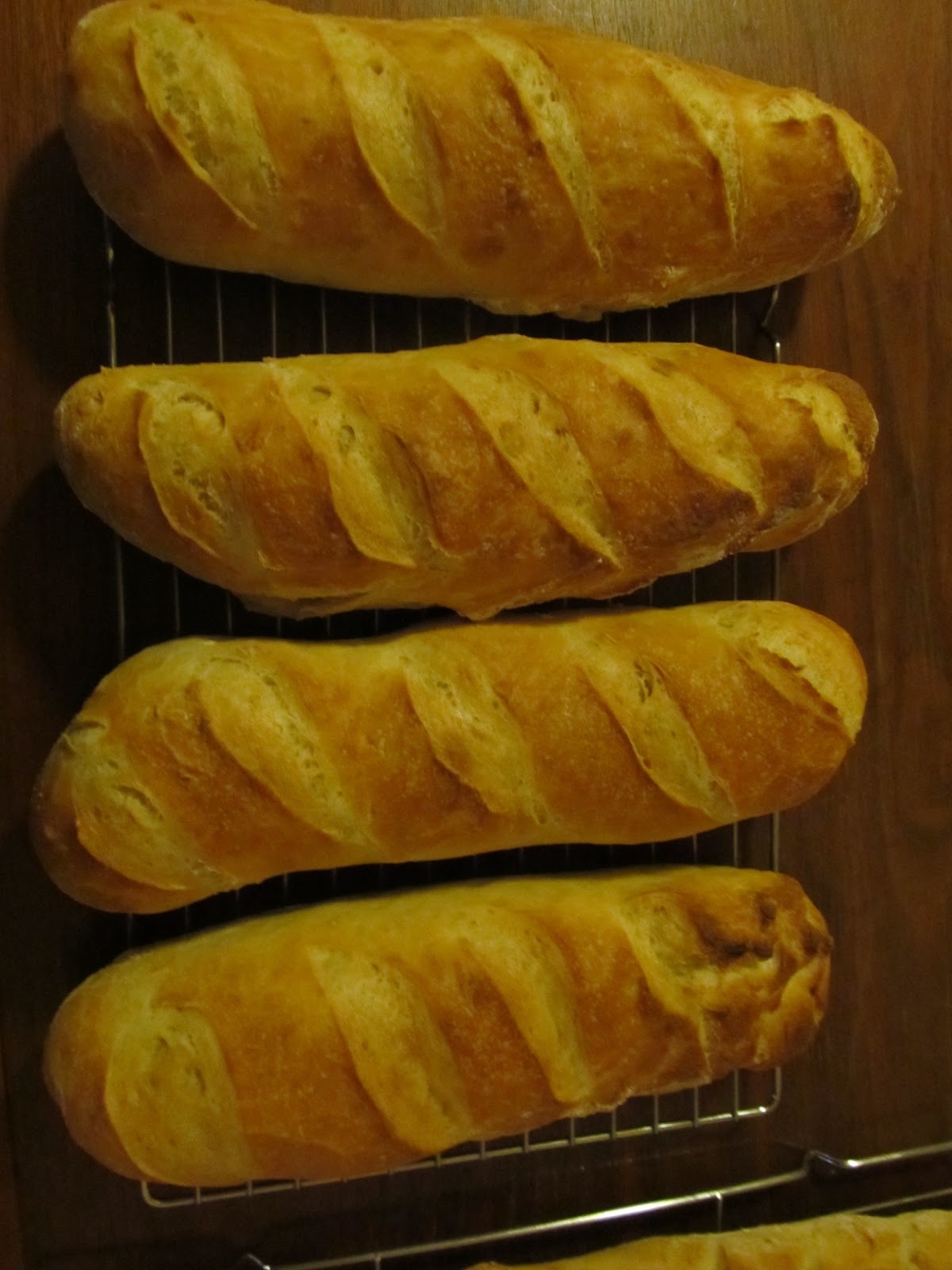
We wimped out a bit the last two Fridays of the month. We didn't have to do much searching for our local food. Week three we had steak from our cow, mushrooms we grew, and squash soup we bottled earlier in the fall. Week four we had spaghetti and meatballs from sauce we bottled this past summer, meatballs we made from our beef, and bread we made from local flour. We were lacking on the salad for the last meal, but our greenhouse plants aren't ready to harvest and we didn't have two hours to drive to Wooster and back.
For the most part we were successful with our Eat Local Project for January. One meal a week 100% local made us stretch a bit, and spurred us to find sources for some staples we don't produce ourselves. What we found was pleasantly surprising.
What we learned
For February we will continue Local Food Fridays. We hope to build a more comprehensive network of producers and get it posted on the blog for others to use. We will be having at least one local food event. And we are going to take on snacks. We are snackers. We eat 6 or 8 times a day (little bits, not huge meals...) Finding local, healthy alternatives to crackers and chips is the challenge for Feb. HELP WOULD BE APPRECIATED.
For the most part we were successful with our Eat Local Project for January. One meal a week 100% local made us stretch a bit, and spurred us to find sources for some staples we don't produce ourselves. What we found was pleasantly surprising.
What we learned
- many staples like flour, grains, potatoes, cheese, meat, eggs are available from local producers year round.
- Oils are much more difficult to find.
- You can't do this alone. You need a local network to help you find producers, and to support them so they can keep producing.
- There are a lot more people in our community interested in local food than we thought.
- Preparing for the long dark season starts in the early spring. If you don't plant it, it won't be there in the winter when you need it.
- We need to can more, have better storage options, and buy things when they are in season.
- Cooking local food (which means mostly cooking from scratch) takes more planning and more time. Learning new processes and habits is hard.
For February we will continue Local Food Fridays. We hope to build a more comprehensive network of producers and get it posted on the blog for others to use. We will be having at least one local food event. And we are going to take on snacks. We are snackers. We eat 6 or 8 times a day (little bits, not huge meals...) Finding local, healthy alternatives to crackers and chips is the challenge for Feb. HELP WOULD BE APPRECIATED.
Tuesday, January 18, 2011
Building a local food system
It has been surprising to me how much local food is available, even at this time of year when food should be at it's most difficult to find. That, all by it's self gives me hope. BUT, it is not easy to find. These micro-producers don't advertise. Word of mouth is the only way to find them. That's OK for me. I'm finding what we need, and the information pool is growing.
This morning I flipped on the news while the coffee was brewing (no, it's not local... it is fair trade, and I'm looking for a better local source, but I'll not give up my coffee). The big news of the morning was Steve Jobs leaving Apple again. Everyone thinks the company will tank again until he comes back. My first thought was, "What a fragile company!" Then, as my brain tends to do, my thoughts wandered into the fragility of the food system I was creating. You see, the difference between a small (micro) farmer/food producer and a company like Apple is that even though Apple has been dependant on the inspiration and leadership of Mr. Jobs, the company will continue to exist, function, and possibly even thrive without him, while a small/micro food producer/farm usually will not survive the loss of the farmer/producer. Often they wont even survive a year of bad weather, credit problems, sickness, etc. Local food systems built on small producers need redundancy. To keep all those redundant producers going requires more customers. And then I stopped thinking...
Later in the morning (around 6:00 am) I turned on the computer to check out my virtual world. One of the posts that popped up was about the "Transformative Power of Social Media Marketing in the Foodshed". Eleanor made me think about my role as a producer, a consumer, and an activist in the local food movement. It's the activist part that I shy away from. Activist implies (in my mind at least) confronting institutions or regulations. I have a more Akido like approach to life, bending, swaying, going around. So, I may rant about regulations or corporations, but I rarely confront them head on. I feel kind of guilty about that. But, maybe this is the solution. If I actively work on building and promoting a local food system, then I'm being and activist, and being nonconfrontational at the same time. It is good for me and mine. It is good for the community. It doesn't attract too much attention from the regulators, and it makes a difference here.
So, besides blogging (which is a very personal thing) I want to build a local producer e-network (like Local Harvest except MUCH smaller.) ANYONE HAVE ANY IDEA HOW AN E- LUDDITE LIKE ME GOES ABOUT THAT KIND OF PROJECT?
I'm also going to get more involved in local food efforts in my community. To start, I'll be attending a screening of FRESH tonight with a group of local producers, chefs, and concerned citizens. More on that tomorrow.
How are you being active in building a local food system?
This morning I flipped on the news while the coffee was brewing (no, it's not local... it is fair trade, and I'm looking for a better local source, but I'll not give up my coffee). The big news of the morning was Steve Jobs leaving Apple again. Everyone thinks the company will tank again until he comes back. My first thought was, "What a fragile company!" Then, as my brain tends to do, my thoughts wandered into the fragility of the food system I was creating. You see, the difference between a small (micro) farmer/food producer and a company like Apple is that even though Apple has been dependant on the inspiration and leadership of Mr. Jobs, the company will continue to exist, function, and possibly even thrive without him, while a small/micro food producer/farm usually will not survive the loss of the farmer/producer. Often they wont even survive a year of bad weather, credit problems, sickness, etc. Local food systems built on small producers need redundancy. To keep all those redundant producers going requires more customers. And then I stopped thinking...
Later in the morning (around 6:00 am) I turned on the computer to check out my virtual world. One of the posts that popped up was about the "Transformative Power of Social Media Marketing in the Foodshed". Eleanor made me think about my role as a producer, a consumer, and an activist in the local food movement. It's the activist part that I shy away from. Activist implies (in my mind at least) confronting institutions or regulations. I have a more Akido like approach to life, bending, swaying, going around. So, I may rant about regulations or corporations, but I rarely confront them head on. I feel kind of guilty about that. But, maybe this is the solution. If I actively work on building and promoting a local food system, then I'm being and activist, and being nonconfrontational at the same time. It is good for me and mine. It is good for the community. It doesn't attract too much attention from the regulators, and it makes a difference here.
So, besides blogging (which is a very personal thing) I want to build a local producer e-network (like Local Harvest except MUCH smaller.) ANYONE HAVE ANY IDEA HOW AN E- LUDDITE LIKE ME GOES ABOUT THAT KIND OF PROJECT?
I'm also going to get more involved in local food efforts in my community. To start, I'll be attending a screening of FRESH tonight with a group of local producers, chefs, and concerned citizens. More on that tomorrow.
How are you being active in building a local food system?
Saturday, January 15, 2011
Local Food Friday - Week 2
Friday we had fun with some of the food we found at the Local Roots Market last week. We decided to make pasta from the spelt flour. The flour was produced by Stutzman Farms and Grain Mill.


We added our eggs
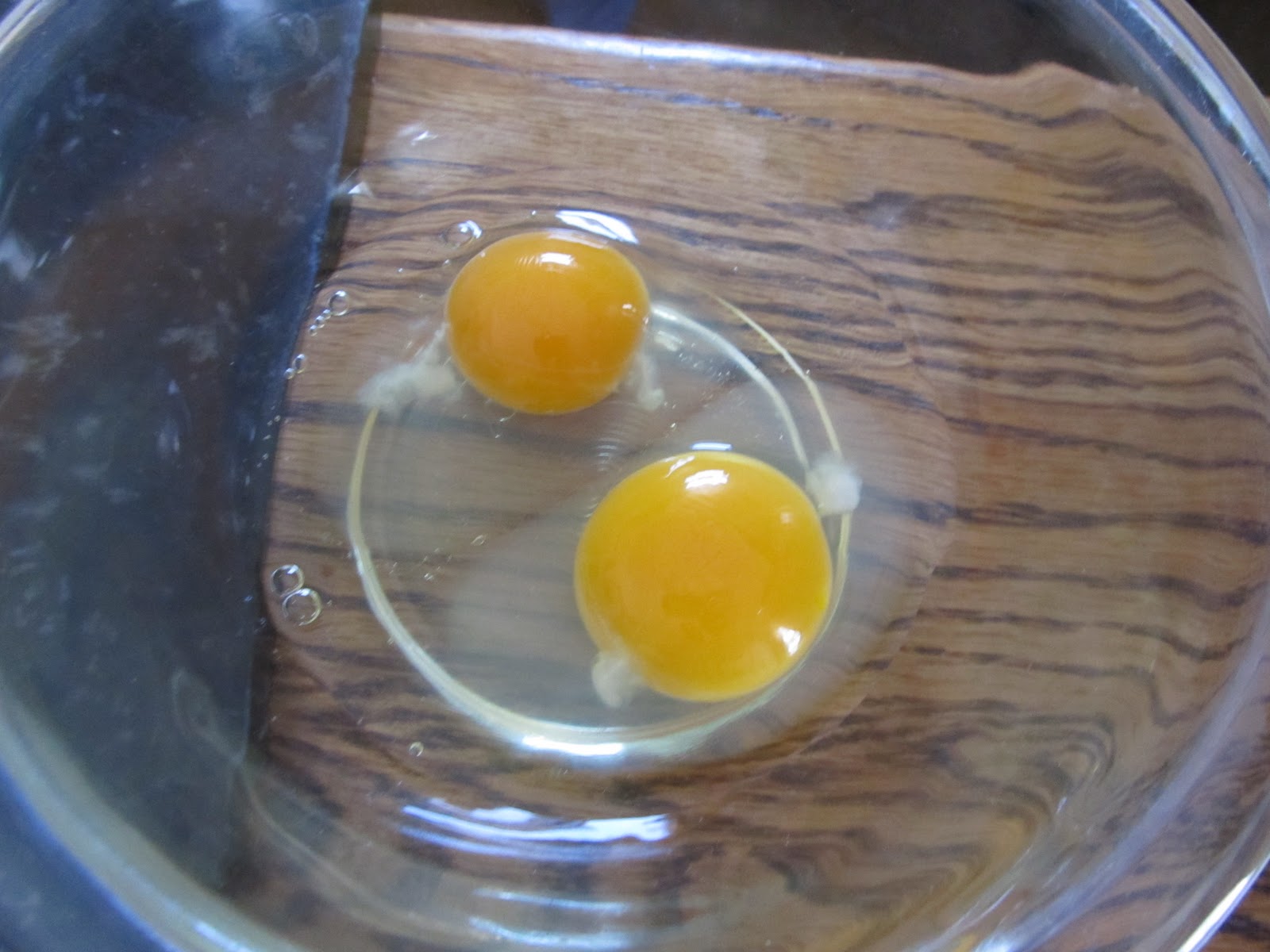
gave it a whirl


kneaded it a bit

let it rest and then rolled it


We had fun making shapes.

We roasted some vegies from our Local Roots trip last week, as well as some of our garlic and herbs.

Cracked open a bottle of sparkling hard cider we made a couple of months ago

and had a great dinner.
We had pasta sauce and meatballs we had made in advance. The only things that weren't local for this meal were the oil for the pasta and roasted vegies, and the salt. The kids liked the pasta even though spelt flour gave it a different taste. They didn't like the blue potatoes. We also did a road trip to a local cheese plant. More on that later.
What local food did you eat this past week?
Tuesday, January 11, 2011
Eat Local 2011 - What is Local anyway?
We have been exploring the food landscape in our area lately, looking for locally produced food. As we have searched, we have also explored what we mean by "local". What we have found is localness varies with the item and the season. In truth, LOCAL is a pretty fuzzy concept. (See Bart Kosko's book Fuzzy Thinking for more on fuzzyness.)
So, we have been poking at criteria, trying to create a way to measure localness (it seems that local isn't the only important factor...)
One factor is distance. Closer is better. For many things, we are trying to find/develop sources within 20 miles of home. Ideally we will get as close as 5 miles. Since we are a farm, we expect many things will be produced within a few hundred feet of our house. But, some things that we use often will not be that local.
Sugar for example. We use a lot of sugar in our fudge business (see our Local Harvest Store.) There is no source for sugar within 20 miles of our house, but there is a sugar plant in the state that makes sugar from beets grown within our region. It's a better option than importing sugar from points further south, because we use a lot.
A second factor we have tried to consider is quantity. Bulky things, or things that we use large quantities of, we hope to find very close to home. Less bulky things, like spices we will accept from further away.
Production methods are our third factor. This one is harder to pin down. Ideal is pure, sustainable, eco/organic from our backyard. Reality is a balance between eco-friendly methods, fair-trade, distance, and other issues.
I felt ambivalent about our hour long drive to the farmers market in search of "local" food. An hour away is outside my ideal for items we use a lot of, like flour, potatoes, greens, etc. But, at this time there are no closer options that I have found and the trip was a much better option than the "local" Super-Walmart.
How would you define local?
Does it influence what you buy?
So, we have been poking at criteria, trying to create a way to measure localness (it seems that local isn't the only important factor...)
One factor is distance. Closer is better. For many things, we are trying to find/develop sources within 20 miles of home. Ideally we will get as close as 5 miles. Since we are a farm, we expect many things will be produced within a few hundred feet of our house. But, some things that we use often will not be that local.
Sugar for example. We use a lot of sugar in our fudge business (see our Local Harvest Store.) There is no source for sugar within 20 miles of our house, but there is a sugar plant in the state that makes sugar from beets grown within our region. It's a better option than importing sugar from points further south, because we use a lot.
A second factor we have tried to consider is quantity. Bulky things, or things that we use large quantities of, we hope to find very close to home. Less bulky things, like spices we will accept from further away.
Production methods are our third factor. This one is harder to pin down. Ideal is pure, sustainable, eco/organic from our backyard. Reality is a balance between eco-friendly methods, fair-trade, distance, and other issues.
I felt ambivalent about our hour long drive to the farmers market in search of "local" food. An hour away is outside my ideal for items we use a lot of, like flour, potatoes, greens, etc. But, at this time there are no closer options that I have found and the trip was a much better option than the "local" Super-Walmart.
How would you define local?
Does it influence what you buy?
Monday, January 10, 2011
Local Food 2011 - a road trip
Saturday was St Distaff's day. It was also the only day any farmer's market was open in our area (area being vastly expanded from my ideal...) We are lucky. We have a year round, indoor, farmers market in East Central Ohio. Of course, it is an hours drive from our house, but it is "local". (It really is a wonderful market, and an inspiration for small producers like me, as well as being a great resource.) It's called Local Roots and is located in Wooster.
Anyway, on this past Saturday Local Roots was hosting Roc Day in honor of St. Distaff. So, since we were in desperate need of some local produce and grain, we took a drive through Amish country to attend the festivities at Local Roots.
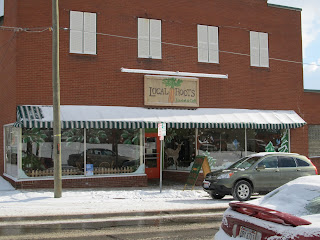 Local Roots. It's a drive but a great resource for our area.


Anyway, on this past Saturday Local Roots was hosting Roc Day in honor of St. Distaff. So, since we were in desperate need of some local produce and grain, we took a drive through Amish country to attend the festivities at Local Roots.


Spinners and Weavers celebrating St. Distaff's Day


Lots of 'local' produce, baked goods, crafts, and people.
We got potatoes, mushrooms, spelt flour, wheat flour (and found a fairly local Amish mill that grows and grinds organic grain...!), oat meal, carmel popcorn, and spinning tips. It was a VERY fun trip. (I'll be doing a post on the nature of "local" soon.)
Sunday, January 9, 2011
Local Food Friday - Eat Local 2011 week one
The first week of our Eat Local Project was mostly spent exploring what we have or will have available in our area when spring arrives. The outlook is promising, but the list of things available right now is very short. Most of what is available now we have in our own back yard, eggs, milk, cheese, meat. No produce to speak of. Planning for next winter has already started.
Our Friday Local Food meal was nothing special. We had a pot roast. The roast came from our calf Chuck. We still have several hundred pounds of beef in the freezer, so we are in pretty good shape for meat. With the pot roast we had garlic, carrots, and roasted tomatoes. We had green beans on the side. What we didn't have that we normally would have was potatoes, onions, bread, and salad. We have the those things in the pantry, but none of them were remotely local, so we did without. It was a good meal, but it highlighted some of the things we need to plan for if we are going to succeed in living on local food.
Our Friday Local Food meal was nothing special. We had a pot roast. The roast came from our calf Chuck. We still have several hundred pounds of beef in the freezer, so we are in pretty good shape for meat. With the pot roast we had garlic, carrots, and roasted tomatoes. We had green beans on the side. What we didn't have that we normally would have was potatoes, onions, bread, and salad. We have the those things in the pantry, but none of them were remotely local, so we did without. It was a good meal, but it highlighted some of the things we need to plan for if we are going to succeed in living on local food.

Roasted Tomatoes

Garlic

Dilly beans
 Carrots
 All from our fall garden.
As we were preparing our meal we noticed a distinct lack of variety. That's another thing we are starting to plan for. We will get very tired of beef and boiled vegetables by the end of winter if we don't plan ways to store some other things.
Wednesday, January 5, 2011
Why?
The other day a friend asked me that question. After reading about our Eat Local 2011 project she called me up and ask "Why? Why are you starting a new CRAZY project? Can't you just enjoy your life, and maybe finish some things (like painting your house, saving your old barn, mowing your grass, making more fudge, etc)? Why this project? Why now? I liked your blog so much better when you wrote about your kids, your goats, Mouse Wars, gardening, remodeling, etc. This Soapbox stuff is no fun to read."
Why? For me there are two main reasons, security and health. There are lots of "green" or "save the world" reasons that could be listed, but they don't motivate me to do more than talk, write, and dabble. This project is being done for purely selfish reasons.
Security
We are highly dependent on a very fragile, over-stretched food system. We have no control, no real choice, no real voice in the system. And the system is crumbling. Soil has been killed, diversity has been lost, and the whole thing has been propped up with oil (another fragile system...) As I see food prices rising every day and more breakdowns in the production and delivery systems, I feel less than secure. In fact, I'm afraid for myself and my family. The only solution is to reclaim responsibility for our own food. The way to do that is by creating a local food system. That can't be done by talking or writing. It can only be done by active commitment. We produce what we can, we get the rest from others in our community. That supports them and provides security for each of us. When the system crashes or crumbles, we will be OK.
Health
Fresh, natural, whole foods in season are vital to good health. The food being produced in our industrial food system, even with all the "nutrients" added to the final product, don't promote health. The whole system is focused on producing more, cheaper food. There is no thought given to health except as a marketing tool. Being part of a local fresh natural food system is an important step toward being responsible for our own health.
I guess that under my two reasons there is a third, more important reason. That is responsibility. I am responsible for what I do in the world. The only thing I can really change is what I do. So, this project is about taking responsibility for the food aspect of my life. I'm dragging my family along on this one, and blogging about it to encourage you.
That's why we are doing this project now.
(the other projects, paint, barns, etc will continue and will get some blog time too... As for Mouse Wars, it's rather like the Korean War. It hasn't really ended, we skirmish back and forth across the DMZ every day. There are minor losses on both sides, but it doesn't often make the news.)
Why? For me there are two main reasons, security and health. There are lots of "green" or "save the world" reasons that could be listed, but they don't motivate me to do more than talk, write, and dabble. This project is being done for purely selfish reasons.
Security
We are highly dependent on a very fragile, over-stretched food system. We have no control, no real choice, no real voice in the system. And the system is crumbling. Soil has been killed, diversity has been lost, and the whole thing has been propped up with oil (another fragile system...) As I see food prices rising every day and more breakdowns in the production and delivery systems, I feel less than secure. In fact, I'm afraid for myself and my family. The only solution is to reclaim responsibility for our own food. The way to do that is by creating a local food system. That can't be done by talking or writing. It can only be done by active commitment. We produce what we can, we get the rest from others in our community. That supports them and provides security for each of us. When the system crashes or crumbles, we will be OK.
Health
Fresh, natural, whole foods in season are vital to good health. The food being produced in our industrial food system, even with all the "nutrients" added to the final product, don't promote health. The whole system is focused on producing more, cheaper food. There is no thought given to health except as a marketing tool. Being part of a local fresh natural food system is an important step toward being responsible for our own health.
I guess that under my two reasons there is a third, more important reason. That is responsibility. I am responsible for what I do in the world. The only thing I can really change is what I do. So, this project is about taking responsibility for the food aspect of my life. I'm dragging my family along on this one, and blogging about it to encourage you.
That's why we are doing this project now.
(the other projects, paint, barns, etc will continue and will get some blog time too... As for Mouse Wars, it's rather like the Korean War. It hasn't really ended, we skirmish back and forth across the DMZ every day. There are minor losses on both sides, but it doesn't often make the news.)
Tuesday, January 4, 2011
A snapshot of what we eat
Here's a quick look at what we ate for breakfast and how far we have to go in the next three months.


Whole wheat pancakes for breakfast. Simple, made from scratch, topped with local maple syrup. This is what the kids ask for almost every day. So where do all these ingredients come from?
Flour - King Arthur Premium Whole Wheat - At least as far away as Kansas, probably farther. 700 - 1000 miles.
Canola oil - Generic - Somewhere in Canada. 700 - 1000 miles
Baking Powder - Sodium bicarbonate from a mine somewhere and corn starch from the Nebraska (probably). At least 1000 miles.
Sugar - Domino - Somewhere in Florida probably. 700 miles
Whole Milk - our cow - 150 feet
Free Range Eggs - our chickens - 150 feet
Maple Syrup - Adelsberger's Farm - 5 miles
Obviously we have a problem. If it isn't from our back yard, the stuff we ate for breakfast traveled WAY TOO FAR. More than half of the ingredients for today's breakfast traveled at least 700 miles. That's not local.
Solutions we will start exploring.
Local Grain Mills and Local grain producers.
Switching to local honey instead of sugar (except for fudge making... fudge doesn't set when made with honey.)
Changing what we eat. If breakfast was scrambled eggs, yogurt, and bottled or frozen fruit, we could have been almost entirely local.
So, where did your breakfast come from?
Monday, January 3, 2011
Eat Local 2011
The past few weeks we have had some interesting conversations around the table. Many of them have been spurred by ideas and anecdotes from Barbara Kingsolver’s book Animal, Vegetable, Miracle. Most often, when we weren’t laughing along with the story, the conversation ran along the “we’ve done that” and “when we did that this is what happened…” The rest of the time we talked about the nature of our food, where it comes from, what cool things Barbara’s family did that we want to try, etc. At the end of CC and I reading and discussing the book we found ourselves with a wistful, empty feeling. We had done most, if not all of the local living adventures described in the book (except the trip to Italy, which is on the MUST DO list.) We talk about the importance of local food, write about it, read about it, and dabble in it. But we always backslide. The month long project ends, or we get busy, or… any of a thousand things. So, we find ourselves creeping closer, but never really fully committing.
So, as they say, “talk is cheap, (it’s time for us to) shut-up and dance.”
This week we are launching our Eat Local 2011 project. We are going to spend the year building the habit of eating local food.
I know, January is a pretty stupid time to start such a project. There is nothing growing locally. We are setting ourselves up for failure even before we start. But, we have given some thought to this. We are giving ourselves three months to put the pieces together.
Here’s our plan:
January
This week I will be adding a page explaining the project. I’ll include a button you can get to link back to the project information. I’ll also include a link to anyone who wants to dance with us.
I know, January is a pretty stupid time to start such a project. There is nothing growing locally. We are setting ourselves up for failure even before we start. But, we have given some thought to this. We are giving ourselves three months to put the pieces together.
January
- Local Food Fridays – Our main meal on Friday will be 100% local. We will use this as an opportunity to push our awareness of what is available in the long dark season, and to build connections with local producers.
- Explore where our food comes from.
- Find sources for staples.
- Plan the new and expanded garden so that we can meet more of our food needs.
- Filling the gaps – What things can we not possibly get locally? What can we do without? What is the best source for those things we can’t do without?
- Snacks – Local alternatives to the processed chips, crackers, etc. that we love.
- Start the garden.
- Continue Local Food Fridays
- Planting, Planting, Planting
- Explore food storage options so we will be ready for the production season
- Find local cheese, and learn to make cream cheese, soft cheeses, feta, etc.
- Find processer for chickens, rabbits, etc. (Or convince the family that we can and should do our own…)
- Continue Local Food Fridays
- Take the plunge, 100% local.
- Continue Local Food Fridays Posts to highlight what is in season here and how we are dealing with it.
Subscribe to:
Posts (Atom)
LinkWithin
